Happy Camper Vintage Trailer
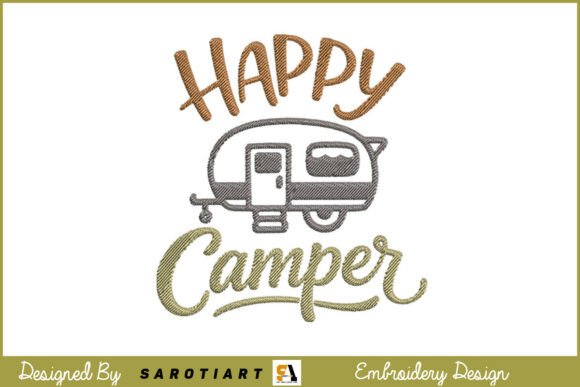
The allure of the open road is timeless, evoking images of freedom, adventure, and simple pleasures. For those who wish to carry that spirit into their daily lives or personal projects, the Happy Camper Vintage Trailer embroidery design offers a sophisticated yet nostalgic touch. This motif is not merely a graphic; it is a statement piece that blends rustic charm with modern elegance. Featuring a classic teardrop trailer rendered in a refined charcoal grey and white palette, paired with the phrase “HAPPY” in a wood-textured block font and “Camper” in an elegant sage green script, this design appeals to a wide array of creators.
However, while the visual appeal is undeniable, translating a digital design into a tangible embroidered product requires more than just pressing “start.” Many enthusiasts and small business owners overlook the technical nuances of embroidery, leading to subpar results that fail to capture the intended aesthetic. Understanding the intricacies of stitch types, fabric choices, and digitization quality is essential for ensuring your project looks as professional as the inspiration behind it.
Understanding the Design Aesthetic
The Happy Camper Vintage Trailer design strikes a careful balance between rugged outdoorsmanship and polished style. The use of charcoal grey and white provides a neutral, versatile base that pairs well with various color schemes, making it suitable for everything from dark denim jackets to light linen tote bags. The typography plays a crucial role here: the rustic, wood-textured block font grounds the design in its camping heritage, while the flowing sage green script adds a layer of sophistication and softness.
This combination is particularly effective for branding purposes. Small business owners selling outdoor gear, cabin rentals, or travel accessories can leverage this design to create cohesive merchandise. It communicates a specific lifestyle—one that values comfort, nature, and joy—without being overly literal or cliché. For hobbyists, it serves as an excellent way to personalize items like travel pillows, cooler bags, or home décor accents such as throw pillows and wall hangings.
Common Pitfalls in Embroidery Execution
Even with a beautifully crafted design file, errors during the execution phase can ruin the final product. One of the most frequent mistakes involves ignoring the limitations of stitch density. High-quality fill stitches require adequate space to lay flat and look smooth. If a designer attempts to cram too much detail into a small area, or if the underlying digitization is poor, the result can be a lumpy, distorted image that loses the delicate balance of the original art.
Another critical oversight is the choice of backing material. Embroidery stabilizers are not one-size-fits-all. Using a heavy-duty cut-away backing on a lightweight fabric like silk or thin cotton can cause puckering, distortion, or even tearing over time. Conversely, using a temporary tear-away backing on a stretchy knit fabric may lead to shifting during the stitching process, misaligning the text and the trailer graphic. Proper selection ensures that the structure of the garment remains intact while providing enough support for the needles.
The Impact of Poor Quality Control
When these technical aspects are neglected, the consequences extend beyond mere aesthetics. For commercial users, a poorly executed design reflects badly on their brand reputation. Customers expect high-quality merchandise, and visible flaws such as loose threads, uneven tension, or misaligned text can lead to returns, negative reviews, and lost trust. In terms of efficiency, troubleshooting these issues after the fact wastes valuable time and resources. Correcting a mistake often means ripping out stitches—a tedious process that risks damaging the base fabric—and starting over, which increases material costs.
Furthermore, the longevity of the embroidery is compromised. If the underlay stitches are insufficient, the top layers may sink into the fabric, causing the design to look muddy or indistinct. Over time, this can accelerate wear and tear, especially on items that undergo frequent washing, such as camping gear or workwear.
Best Practices for Flawless Results
To avoid these common pitfalls, it is essential to approach the embroidery process with a methodical mindset. First, always inspect the digitization file before beginning production. Look for areas where the stitch direction changes abruptly or where density appears excessive. Most modern embroidery software allows you to simulate the stitching process virtually, giving you a chance to identify potential problem spots before any thread is consumed.
- Select the Right Stabilizer: Match the stability to the fabric’s weight and stretch. For woven fabrics like canvas or cotton, a cut-away backing provides durable support. For knits, a combination of cut-away and water-soluble topping can prevent needle marks and maintain texture.
- Test on Scrap Material: Never run a new design directly onto your final product. Create a test sample using the same fabric and thread colors. This allows you to adjust tension settings, hoop placement, and trim excess threads without risking your inventory.
- Monitor Thread Tension: Incorrect tension is a primary cause of thread breaks and loop formation. Regularly check both the upper and bobbin tensions, adjusting them slightly if the stitches appear uneven or if the back of the work shows excessive thread loops.
Evaluating Your Options Before Purchase
Before acquiring the Happy Camper Vintage Trailer design, consider the source and format of the file. Not all embroidery designs are created equal. Some files may lack proper registration marks or have inconsistent stitch lengths that affect the final look. Reputable vendors typically provide detailed specifications, including recommended fabric types, hoop sizes, and thread color palettes (such as standard Madeira or Isacord equivalents).
Additionally, think about the end use of the item. Are you creating a one-off gift or a batch of products for sale? For large runs, consistency is key. Ensure that the machine calibration is consistent across all units. For smaller batches, focus on the artistic presentation, perhaps adding decorative elements like contrasting topstitching to enhance the vintage feel.
By taking the time to understand the technical requirements and planning ahead, you can ensure that the joyful spirit of the Happy Camper Vintage Trailer is preserved in every stitch. Whether you are a seasoned embroiderer or just starting out, paying attention to these details will elevate your work from simple decoration to professional craftsmanship. Embrace the process, learn from any missteps, and enjoy the satisfaction of bringing this charming design to life on your favorite materials.